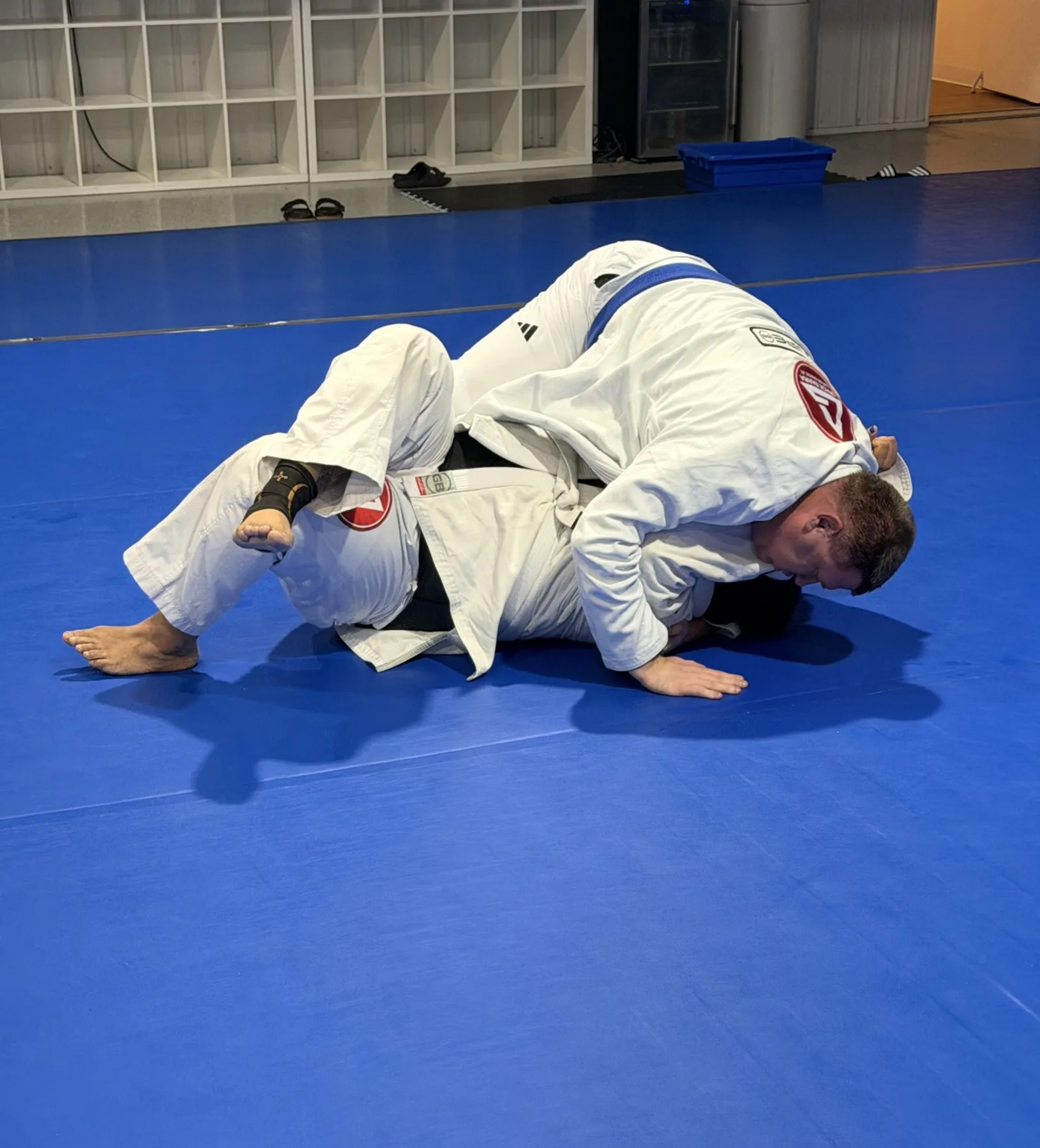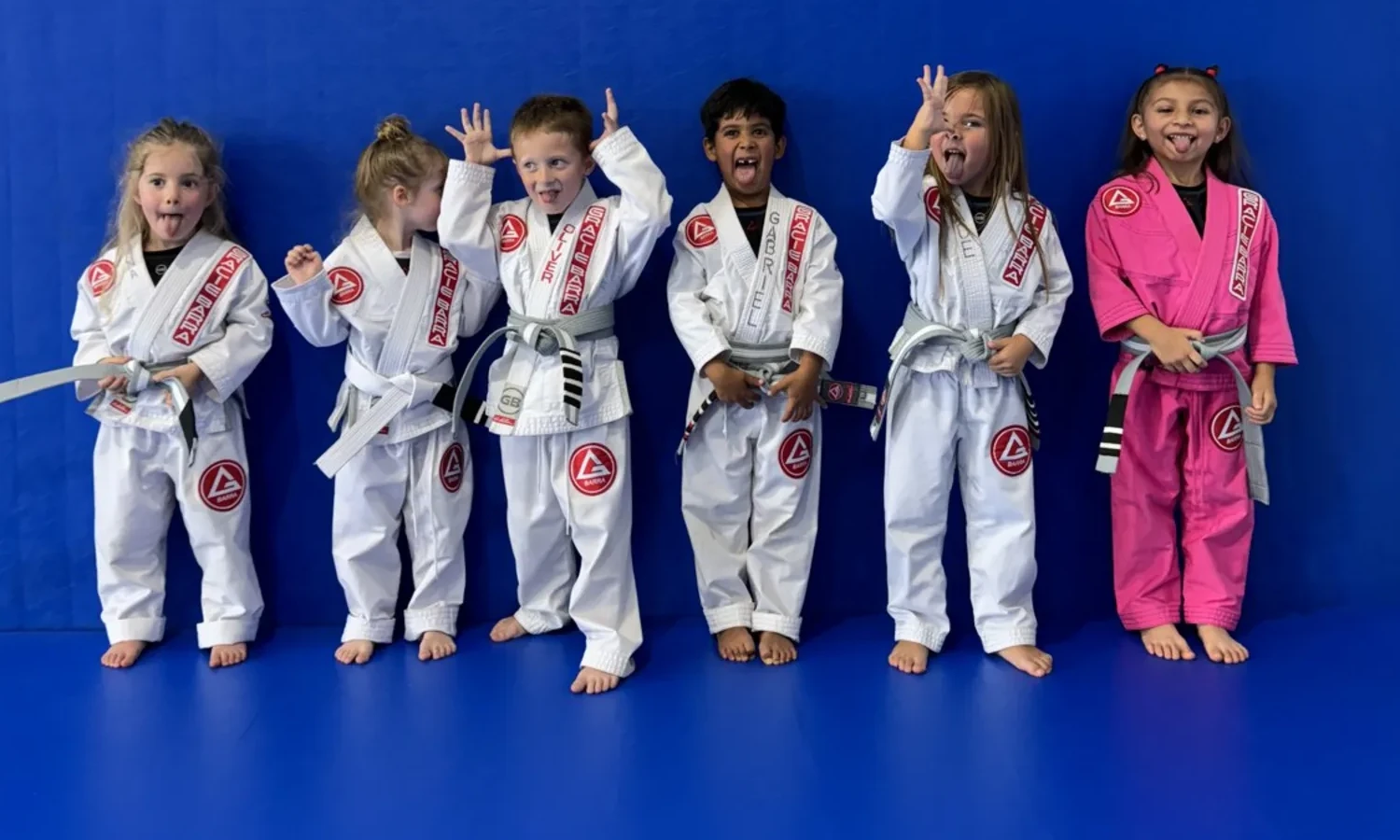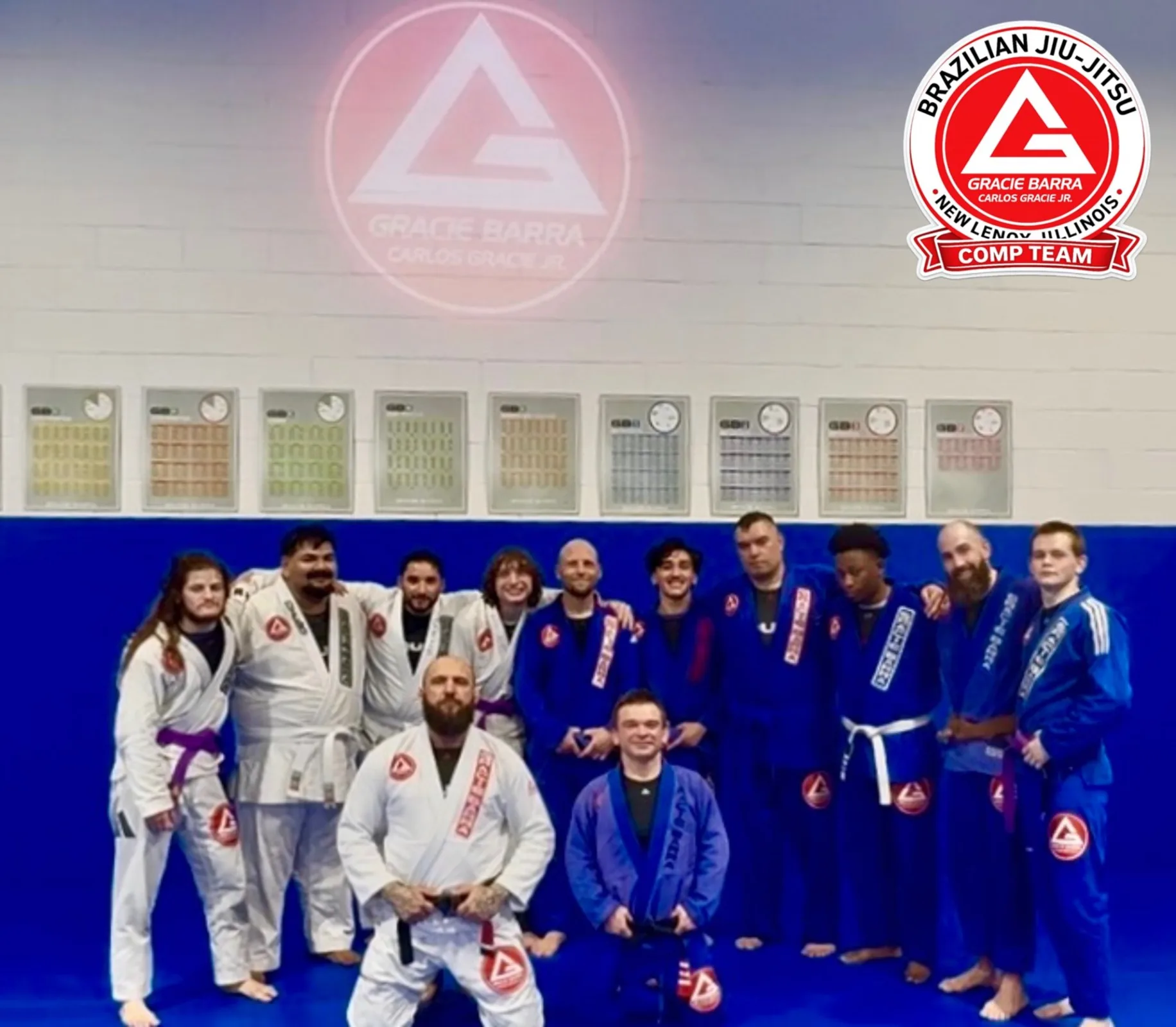
The average adult who starts training at Gracie Barra New Lenox is somewhere between thirty and forty-five, has not played a real sport in over a decade, and has been thinking about it for at least a year.
They are not aspiring fighters. They are people who want to be capable again, who are tired of workouts that bore them, and who have quietly noticed that they would not know what to do if something happened. This guide is for them.
The Three Reasons Adults Actually Start
In practice, almost everyone who walks through the door is driven by one of three things, and often all three at once.
- Self-defense. A real, tested ability to protect themselves and the people with them.
- Fitness that does not require willpower. A gym membership needs discipline. A class you look forward to does not.
- Something that is theirs. An hour a day that is not work, not the kids, and not a screen.
Notice that none of those require athletic talent. They require showing up on a Tuesday.
Am I Too Old For This?
We have white belts in their fifties. We have blue and purple belts who started in their forties. The oldest students in the room are frequently the most technical, because they were never able to muscle through a bad position and had to learn the right answer.
Age changes how you train. It does not change whether you can. Older students drill more, roll with chosen partners, skip the reckless scrambles, and take an extra recovery day. That is not a downgrade. That is just training intelligently.
Am I Too Out Of Shape?
This is the excuse that costs people the most years. The plan is always the same: get in shape first, then start. It almost never happens, because there is nothing driving it.
Jiu-Jitsu is the driver. It is full-body, it is anaerobic, and it is genuinely interesting, which is the part a treadmill can never solve. Most students drop weight in the first three months without changing anything about their diet, purely from the volume of work they no longer notice doing.
Come in as you are. The GB1 Fundamentals program is scaled specifically for people whose starting point is zero.
What The First Class Feels Like
Honest version: awkward, tiring, and much better than you expect. You will be introduced to a coach, shown where to change, and paired with someone experienced who has been asked to look after you.
You will learn maybe three things. You will forget two of them. You will be out of breath earlier than you would like, and nobody will care or notice, because every single person on that mat had the same first class.
You will not be thrown into hard live rounds on day one. You drill first. Live training comes when you are ready for it, and the pace of that is a conversation, not a test.
The First Six Months, Month By Month
Month one: survival
You learn to breathe under pressure and stop panicking when someone is on top of you. You will be sore in muscles you did not know existed. This month is the filter, and getting through it is the entire game.
Month two: recognition
Positions get names. You start seeing the same problems repeat and realizing there are actual answers. Class stops being chaos and starts being a puzzle.
Month three: escapes
You get out of things that used to hold you forever. This is the first month it feels like it is working, and it is usually the month people commit for real.
Month six: a game
You have preferences. You have techniques that are yours. You are catching newer students, surviving longer with senior ones, and your conditioning is unrecognizable from where it started.
The Self-Defense Reality
Jiu-Jitsu is not a magic shield, and any school that sells it that way is lying to you. What it does provide is genuine competence in the range where most real altercations end up: close, tangled, and often on the ground.
More useful than the techniques is the composure. The single biggest advantage a trained person has is that the situation is familiar. Someone grabbing you is a Tuesday. Panic is what gets people hurt, and panic is trainable out.
That is also why the women's training side of the room grows every year. Leverage-based control against a larger opponent is not a theory in Jiu-Jitsu. It is the whole design.
The Part Nobody Tells You: The Room
Ask any long-term student why they still train and very few will lead with self-defense. They will talk about the people.
You cannot spend an hour physically problem-solving with the same forty adults, several nights a week, without those relationships becoming real. For a lot of men and women past thirty, the academy quietly becomes the primary place they have friends outside of work.
The techniques are why people start. The room is why they stay.
How To Fit It Into A Real Schedule
Two classes per week produces steady progress. Three is optimal for most working adults. That is roughly three hours out of a hundred and sixty-eight, and it is less time than most people spend scrolling in a given week.
Evening classes are built around commuters coming home to New Lenox, Frankfort, Mokena, Joliet, Manhattan, Tinley Park. Text 815-396-JITS and we will send the current schedule so you can see exactly where it fits before you commit to anything.
Frequently Asked Questions
Do I need experience in any martial art?
No. GB1 Fundamentals assumes zero background. Most people in that class started within the last year.
Will I get hurt?
Expect bruises and soreness in the first month. Serious injury is uncommon in a supervised room where the tap is respected instantly, which is the standard here.
Do I have to spar with people much bigger than me?
No. Partners are assigned with size and experience in mind, especially early on. Advanced students train with beginners at the beginner's pace, not their own.
What if I can only train once a week?
Once a week still beats zero, and plenty of members start there and increase later as the habit takes hold.
How long does it take to get a blue belt?
For most consistent adults, roughly two to three years. Belts in Jiu-Jitsu are famously slow, which is exactly why they mean something.
Gi Or No-Gi, And Which One To Start With
Gi training uses the traditional uniform, and the jacket and pants become handles for grips, chokes, and control. No-gi strips that away and runs on speed, body locks, and underhooks. Both are Jiu-Jitsu, and both make you better.
Start in the gi. It slows the game down, which is exactly what a beginner needs, and it forces you to solve problems with position instead of athleticism. Students who begin no-gi often develop a habit of escaping with speed, and that habit stops working the moment they meet someone stronger.
The Gracie Barra curriculum is gi-based for that reason. Your uniform is included with the intro, so there is nothing to sort out before your first class.
What The Gracie Barra Standard Actually Means For You
Gracie Barra is the largest Jiu-Jitsu organization in the world, with more than one thousand schools across sixty-plus countries. As a student, the practical value shows up in three places.
- A published curriculum. GB1 Fundamentals, GB2 for three-stripe white through blue belt, and GB3 for blue through black belt. You always know which room you belong in.
- A consistent standard. The techniques taught here are the same techniques taught at every affiliate, so travel or a relocation does not reset your training.
- Instructor certification. Coaches are trained and certified through the organization rather than self-appointed.
None of that replaces the local room, and the local room is what you actually experience. But it does mean the structure underneath your training was built and tested by an organization with decades of it.
Recovery For Adults Who Have Jobs
The students who last are not the toughest ones. They are the ones who manage recovery so they are still training in year three.
- Sleep is the entire recovery program. Everything else is a rounding error.
- Hydrate before class, not just during. Grip fatigue and cramping are usually a water problem.
- Tap early and tap often. A tap costs you nothing. An ego injury costs you six weeks.
- Take the rest day. Two quality sessions beat four exhausted ones.
If something hurts in a way that is sharp rather than sore, tell a coach. Training around an injury is normal in Jiu-Jitsu, and there is almost always a way to keep you on the mat safely.
Common Mistakes In The First Three Months
- Going too hard, too early. Intensity is not the same as learning, and it is the fastest route to an injury that ends your streak.
- Skipping class because you are tired. The tired classes are the ones that build the habit.
- Buying six gis and a rash guard collection before class three. Train first, shop later.
- Comparing yourself to a two-year blue belt. Compare yourself to your own first week.
- Watching too much online instruction and drilling too little. Reps beat highlight videos.
Start With Two Weeks
You do not need to decide whether you are a Jiu-Jitsu person today. You need two weeks of data.
The $19.99 intro covers 2 weeks of unlimited classes with your uniform included, and you are not required to continue afterward. Come see the room at 14627 W Edison Dr, New Lenox, IL 60451 and decide from the mat instead of from your phone.
New Student Experience
Ready to See It In Person?
2 Weeks — $19.99