Most people who walk onto the mat at Gracie Barra New Lenox tell us the same thing: they thought about it for a long time before they actually did it. Six months. A year. Sometimes longer. The interest was never the problem. The unknown was.
This guide exists to remove the unknown. If you live in New Lenox or anywhere nearby in Frankfort, Mokena, Joliet, Manhattan, Tinley Park, and you have been quietly researching Brazilian Jiu-Jitsu, everything you need is below. No sales language, no belt-rank mysticism, just a clear picture of what training here actually involves.
What Brazilian Jiu-Jitsu Actually Is
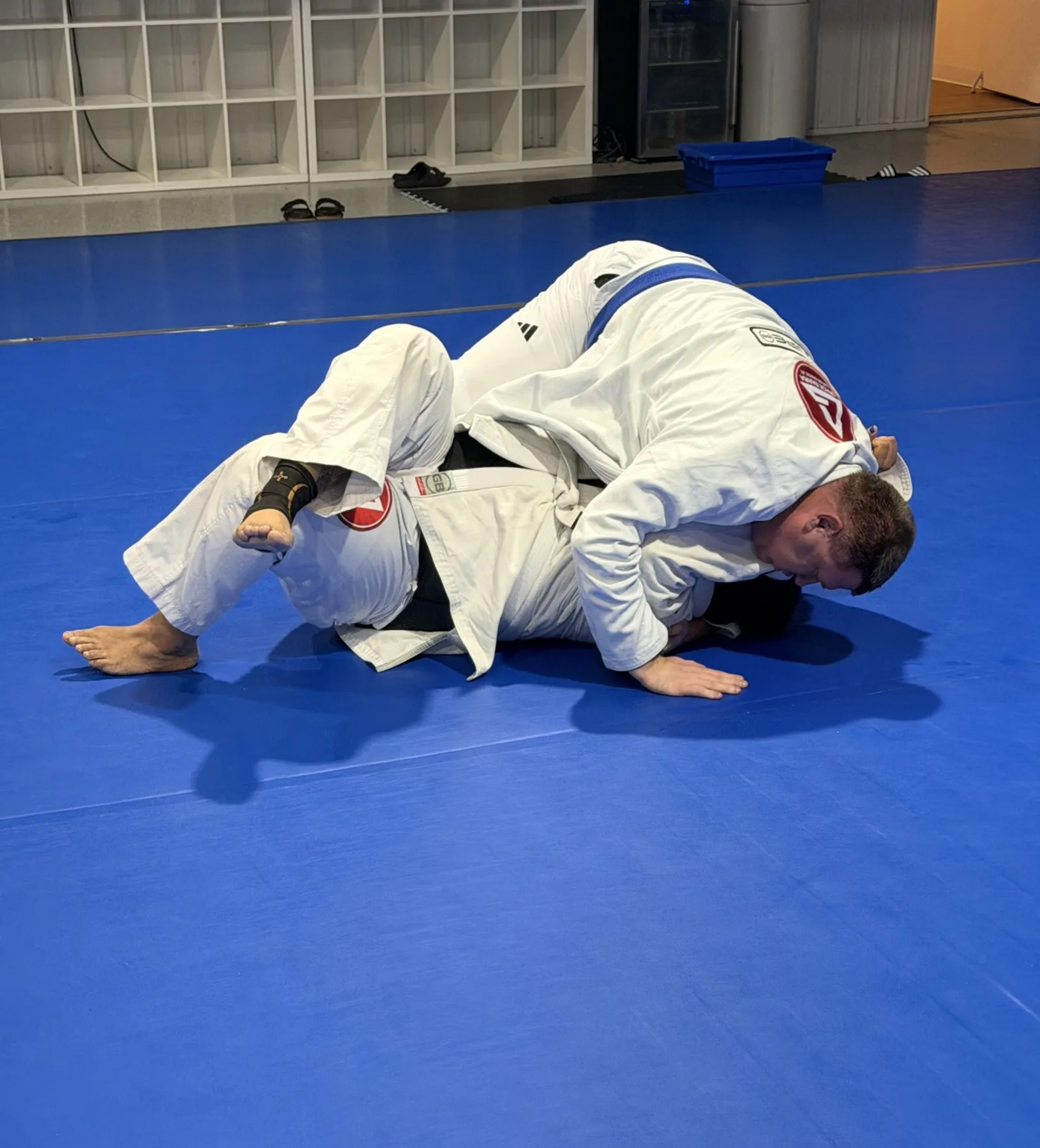
Brazilian Jiu-Jitsu is a grappling art. There is no punching and no kicking. The entire system is built around controlling another person's body using leverage, position, and timing, then finishing the exchange with a joint lock or a choke that forces them to surrender safely.
That last word matters. Jiu-Jitsu has a built-in off switch. A training partner taps, the technique stops, both people reset. It is the reason a fifty-year-old accountant and a twenty-two-year-old athlete can train in the same room, hard, several times a week, and both walk out fine.
The art earned its reputation because it works for the smaller person. Technique beats size when the technique is correct. That is not a slogan we invented for a website. It is the founding premise of the entire style, and it is the first thing you feel once someone half your weight controls you completely.
Why BJJ Is Different From The Martial Arts You Already Know
Most parents in New Lenox grew up around striking arts. Karate, Taekwondo, maybe boxing. Those arts are excellent at what they do, and they share one feature: you practice the movements mostly in the air, against nobody.
Jiu-Jitsu is different because almost everything is practiced against a live, resisting human being. You cannot fool yourself about whether a technique works. It either holds a real person in place or it does not.
That feedback loop is brutal for the ego and outstanding for skill development. Six months of honest training produces someone who can genuinely defend themselves. Not someone who has memorized a form.
The self-defense argument, honestly
Statistically, most physical altercations end up close range, and a large share end up on the ground. Jiu-Jitsu spends one hundred percent of its time in exactly that range. That is why law enforcement and military programs adopted it, and it is why so many parents choose it for their kids.
It is also the reason our adult program attracts people who have never considered themselves "martial arts people." They are not chasing a black belt fantasy. They want a real skill.
What A Class At Gracie Barra New Lenox Looks Like
Every class runs on the same rhythm, so you know what is coming even on day one. Predictability is deliberate. Nervous beginners quit when they cannot see the shape of the hour ahead of them.
- Bow in and a short warm-up built around the movements you are about to use, not punishment conditioning.
- Technique of the day, broken into small pieces and demonstrated slowly from multiple angles.
- Drilling with a partner at a controlled pace, with a coach circulating and correcting.
- Positional rounds or live rounds, scaled to your experience level.
- Bow out, questions answered, and a short note about what comes next.
A class runs about an hour. You will sweat. You will not be humiliated. There is no tradition here of testing new people by beating them up, and any school that permits it is telling you something about its leadership.
The Gracie Barra Curriculum, And Why It Matters
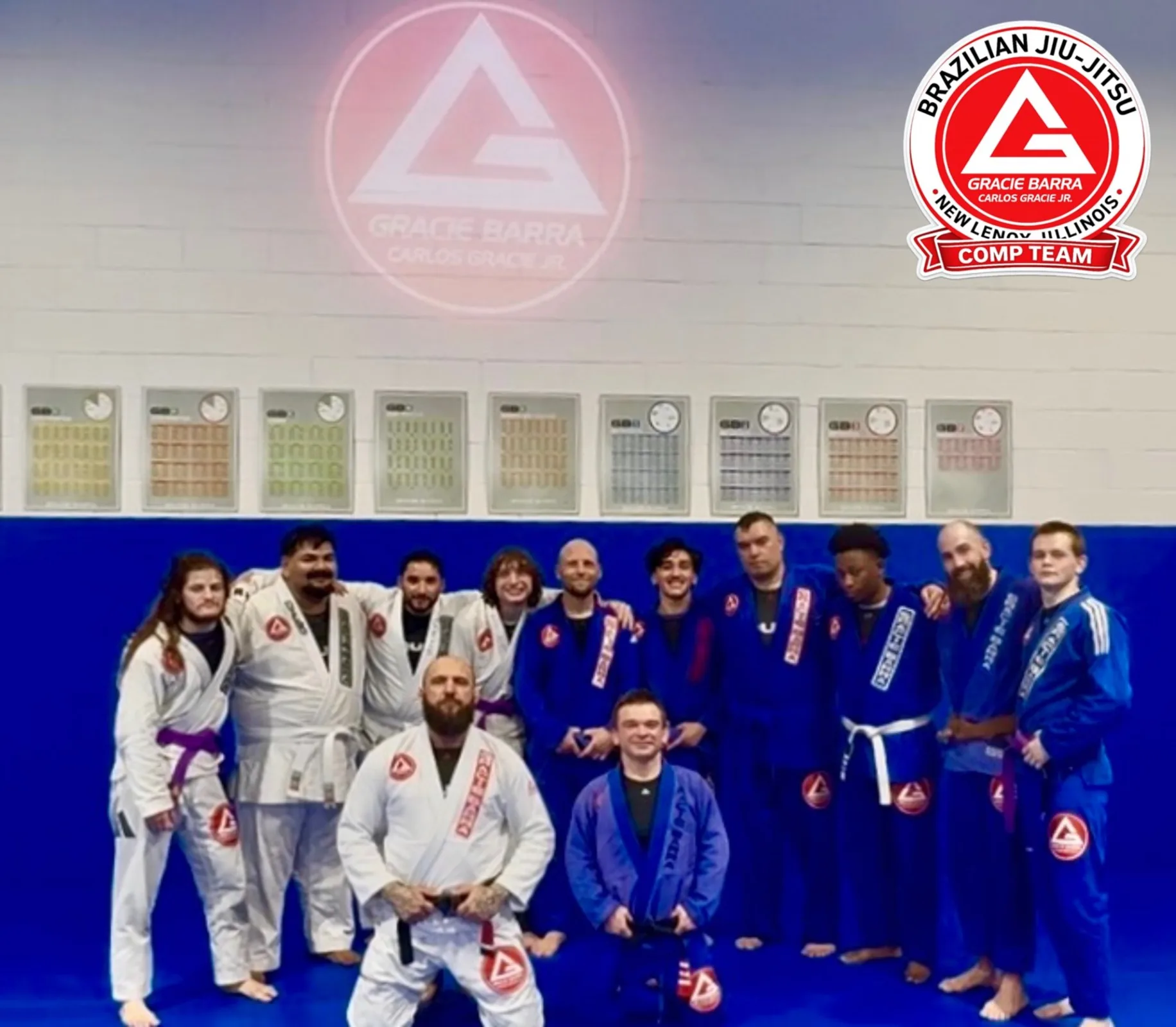
Gracie Barra is the largest Jiu-Jitsu organization in the world, with over one thousand schools across sixty-plus countries. The relevant part for you is not the size. It is the curriculum.
Every Gracie Barra academy teaches from a structured program instead of whatever the instructor felt like showing that night. Adults move through three tiers:
- GB1 Fundamentals, the beginner program covering core positions, escapes, and the first submissions. This is where every new adult starts.
- GB2, for three-stripe white belts through blue belts, adding depth, transitions, and more live training.
- GB3, for blue belt through black belt, where advanced technique and specialization live.
The practical benefit is simple. You always know which class you belong in, you are never stuck in a room over your head, and progress is measured against a standard rather than a mood.
Do I Need To Get In Shape First?
No, and this is the single most common reason people delay for a year. They plan to lose fifteen pounds, then start. The fifteen pounds never happens, because there is no engine driving it.
Jiu-Jitsu is the engine. Three classes a week produces conditioning that no treadmill has ever produced for you, because the clock disappears. You are solving a problem, not counting minutes.
Show up as you are. Coaches scale the intensity. The only requirement is that you keep coming back.
What About Injuries?
Fair question, and it deserves a real answer instead of a reassuring one. Jiu-Jitsu is a contact sport, and contact sports carry risk. The risk in a well-run room is low and mostly consists of sore fingers, bruised shins, and stiff necks in the first month.
Serious injury almost always traces back to one of two things: ego, or bad supervision. We control both. New students drill before they roll, submissions are applied slowly, and the tap is respected instantly and without exception.
How Much Does Jiu-Jitsu Cost In New Lenox?
Pricing in the Chicago south suburbs generally lands between one hundred and two hundred dollars a month for unlimited adult training, depending on the school, the instructor, and the facility.
Rather than guess whether it is worth it, start with the $19.99 2 weeks intro. It includes unlimited classes and your uniform, and you are not required to continue after it ends. Two weeks is long enough to know whether the room is right for you.
What To Bring To Your First Class
- Athletic clothes with no zippers, buttons, or pockets. Shorts and a fitted shirt are perfect.
- A water bottle.
- Short fingernails and toenails. This is the one rule everyone forgets and everyone learns once.
- Ten minutes of buffer time so you are not rushing in mid warm-up.
Your uniform is included with the intro, so you do not need to buy a gi before you know you like it. Leave jewelry at home and remove earrings before you step on the mat.
Training For Kids Versus Adults
The adult and youth programs share a philosophy but not a curriculum. Kids need shorter drills, more variety, and a coach who understands that a seven-year-old and a twelve-year-old are different species.
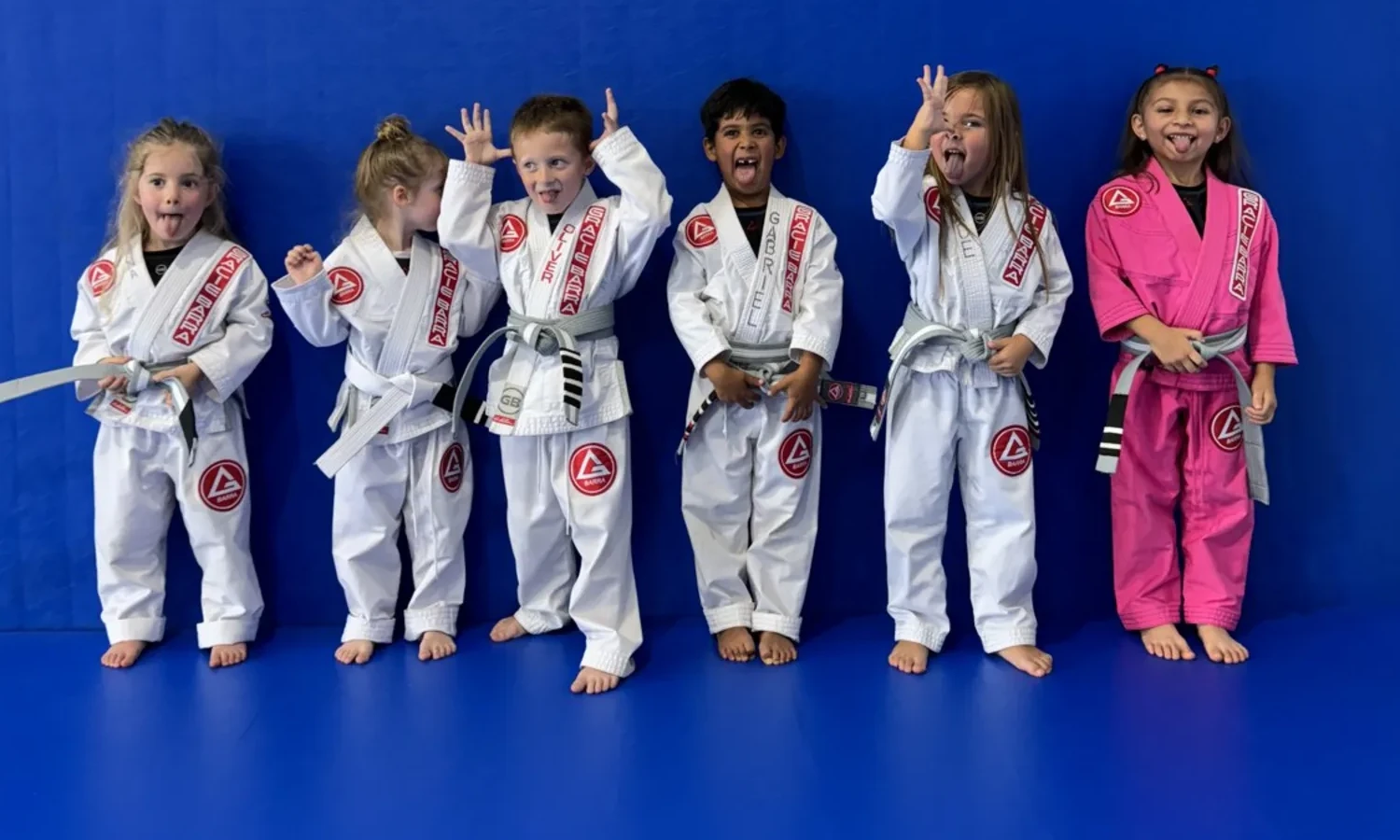
That is why the youth side is split by age instead of lumped together. Little Champions 1 serves ages five to seven, Little Champions 2 serves ages seven to nine, and Juniors serves ages ten and up.
Parents frequently start after their child does. They watch from the side for a month, get restless, and end up on the mat themselves. It happens often enough that we consider it normal.
How Long Until I Am Any Good?
Here is an honest timeline based on training two to three times per week.
- Week one: you are overwhelmed and out of breath. Everyone is. This is not a signal.
- Month one: you stop panicking under pressure and start recognizing positions by name.
- Month three: you escape things that used to trap you, and you survive rounds you used to lose in twenty seconds.
- Month six: you have a game. You know what you are trying to do instead of reacting.
- Year two to three: blue belt, for most consistent students.
The only variable that reliably predicts progress is attendance. Not athleticism, not age, not natural talent. Attendance.
How To Judge A Jiu-Jitsu School Before You Sign Anything
There are good schools and bad schools in every town, and the difference is almost never the trophies on the wall. Use these five checks on any academy you visit, including this one.
- Watch a beginner class, not an advanced one. How the newest person in the room is treated tells you everything.
- Ask who teaches the class you will attend, and meet them. Not the owner giving the tour.
- Look for a written curriculum. If the answer to what gets taught next week is a shrug, progress will be random.
- Watch the live rounds. Are experienced students controlling the pace with beginners, or winning?
- Ask what happens if you need to pause. A straight answer here is a character reference.
A school that welcomes those questions is a school run by someone confident in the product. Anything hand-waved is your answer.
Frequently Asked Questions
Is Brazilian Jiu-Jitsu good for beginners with zero experience?
Yes. The GB1 Fundamentals class is designed for people with no background at all. Everyone in that room started in the same place, most of them recently.
How old is too old to start Jiu-Jitsu?
We have students in their fifties who train several times a week. Older students simply train smarter: more drilling, more positional work, fewer scrambles. Age changes how you train, not whether you can.
Do I have to compete?
No. Competition is available for the students who want it, and completely optional for everyone else. Most of our members never compete and progress just fine.
How many times per week should I train?
Two is enough to improve. Three is the sweet spot for most working adults. More than that is great if your body and your schedule allow it.
Where is Gracie Barra New Lenox located?
We are at 14627 W Edison Dr, New Lenox, IL 60451, minutes from Frankfort, Mokena, Joliet, Manhattan, Tinley Park. You can text us at 815-396-JITS for the current schedule.
The Honest Last Word
The hardest class you will ever take is the first one, and it is hard for reasons that have nothing to do with Jiu-Jitsu. It is walking into a room where you do not know anyone and admitting you are a beginner.
Everyone on that mat did it. Nobody remembers your first class except you. Claim the $19.99 intro, get two weeks with the uniform included, and find out whether this is the thing you have been looking for.
New Student Experience
Ready to See It In Person?
2 Weeks — $19.99