Almost every parent who calls Gracie Barra New Lenox opens with a version of the same question. Is my child old enough? Is my child too old? Did we miss the window?
There is no window. There are stages, and each stage produces something different. This guide walks through what a child actually gains at each age so you can make the decision with real information instead of guessing.
Why Jiu-Jitsu Instead Of A Striking Art
Brazilian Jiu-Jitsu has no punching and no kicking. For a lot of parents in New Lenox, that alone settles the question. The skills your child learns are control skills, not damage skills.
That distinction matters at school. A child who has been trained to strike has one answer available under stress. A child trained in Jiu-Jitsu can hold a situation still, protect themselves, and walk away without anybody getting hurt.
It also matters for the child who is being picked on. Grappling gives a smaller kid a real answer to a bigger kid, and the confidence that follows is not the fake kind that comes from a certificate.
Ages 5 To 7: Little Champions 1
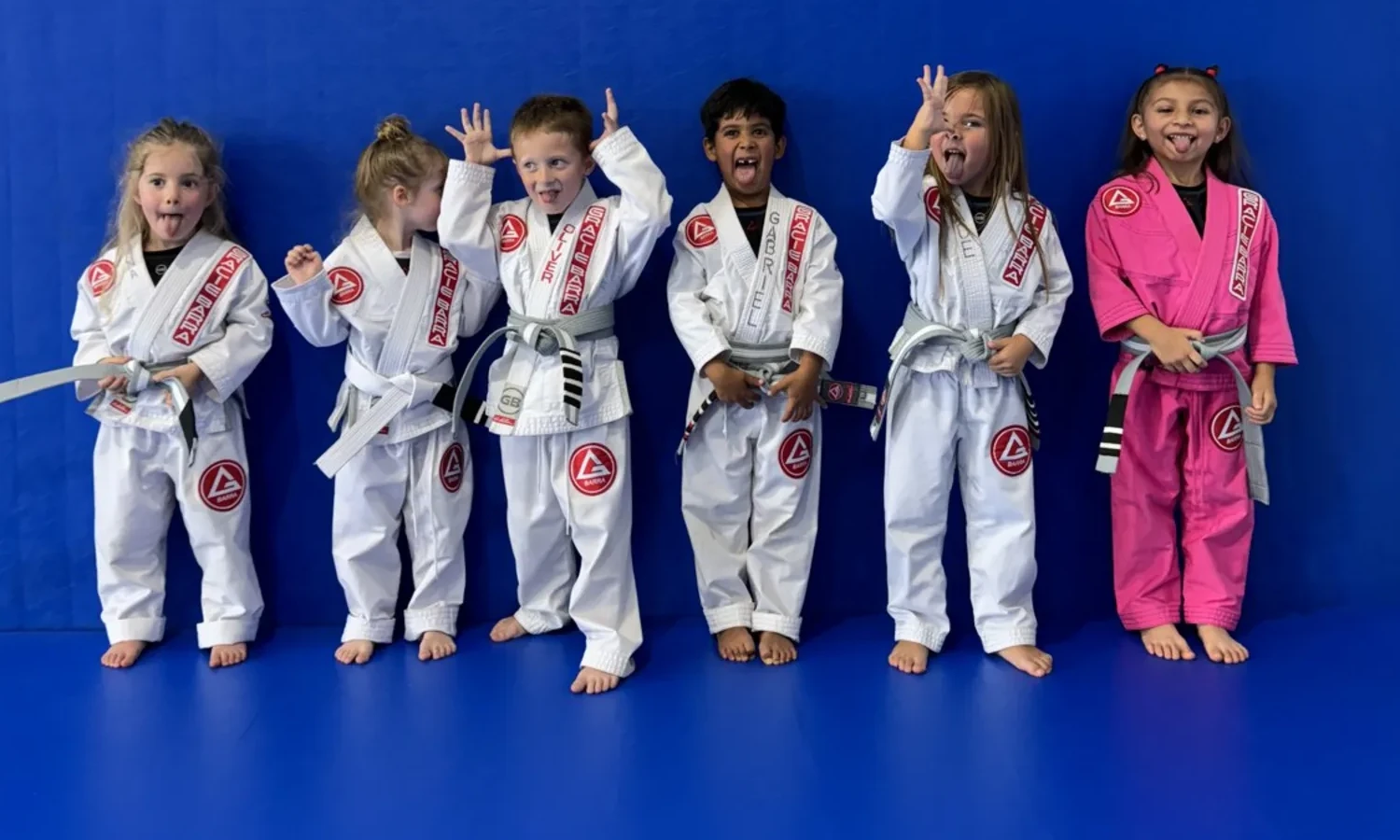
At five, six, and seven, we are not really teaching Jiu-Jitsu. We are teaching the skills that make Jiu-Jitsu possible later: listening the first time, standing on a spot, keeping hands to yourself, taking a turn, and trying something that feels hard.
The technique is real, but it is delivered through games. Kids learn to fall safely, to move on the ground, to escape from underneath, and to control a partner from the top. They think they are playing. They are building a foundation.
Expect the first month to be about focus, not skill. By month two, most parents report a different kid at the dinner table. That is the Little Champions 1 effect, and it shows up at home long before it shows up on the mat.
Signs your five-year-old is ready
- Can separate from you for forty-five minutes without falling apart.
- Follows a two-step instruction most of the time.
- Has physical energy that currently has nowhere to go.
- Is shy, cautious, or hangs back in group settings. This is a reason to start, not a reason to wait.
Ages 7 To 9: Little Champions 2
This is the age where the switch flips. Seven to nine-year-olds can hold a sequence of three or four movements in their head, remember it next week, and get genuinely proud about executing it correctly.
Little Champions 2 runs at a faster pace with less game-wrapping and more actual technique. Kids start live positional rounds with partners their own size, learn to problem solve under mild pressure, and begin earning stripes for demonstrated skill.
The behavioral carryover here is the strongest of any age group. Teachers notice it. Homework gets less negotiable. Kids who used to melt down when something was hard start staying with it, because the mat taught them that hard is temporary.
Ages 10–15: Juniors
Ten is where Jiu-Jitsu stops being an activity a parent signed them up for and starts being something the kid owns. Juniors train something close to the adult curriculum, scaled appropriately.
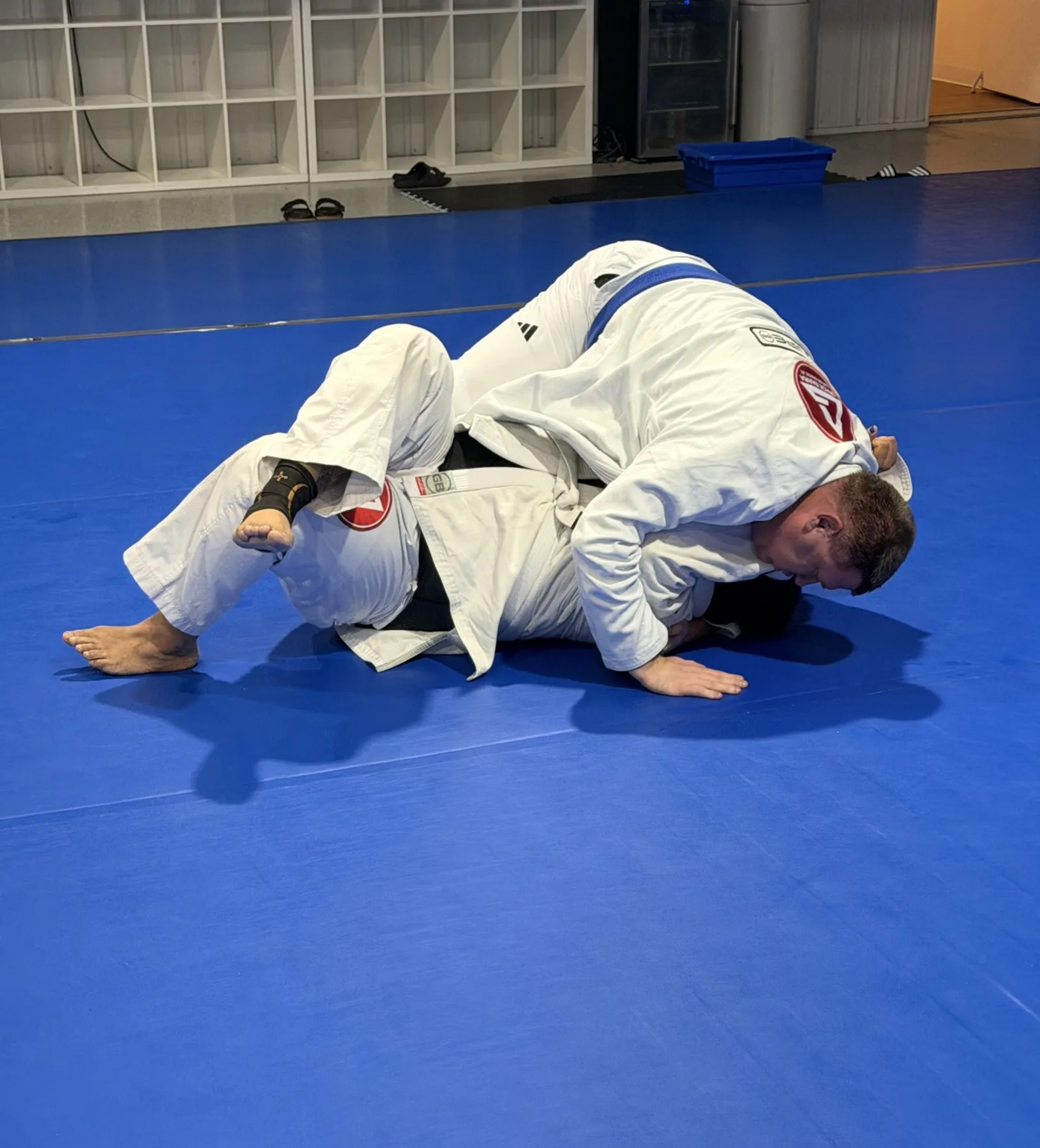
They learn real guard, real passing, real escapes, and real submissions. They roll live. They start to build a personal game based on their body type and personality, and that ownership is what keeps a twelve-year-old training when video games are competing for the same hour.
This is also the critical age for confidence. Middle school is where social hierarchy hardens. A kid who has been physically tested in a safe room, hundreds of times, moves through that environment differently. They are not looking for a fight. They simply are not afraid of one.
What If My Child Is Twelve And Has Never Done Anything?
Start now. Twelve-year-olds learn Jiu-Jitsu faster than seven-year-olds do, because their bodies and attention spans are further along. The only thing they lack is the built-up comfort of the younger kids, and that closes within a month.
The idea that a child has missed the boat at ten or twelve is a myth invented by programs that need families locked in early. Plenty of black belts started as teenagers.
What If My Child Is Shy Or Anxious?
Shy kids are the reason this program exists in the form it does. The structure is predictable, the coaches learn names on day one, and nobody is put on the spot in front of the room until they are ready.
We start quiet kids with drilling partners chosen intentionally, not randomly. The first win is not a submission. It is a kid who walks in on week three and does not look for you before stepping on the mat.
What If My Child Is Too Aggressive?
Also common, and Jiu-Jitsu handles it better than almost any other activity. High-energy kids get a legal, supervised outlet, and then they run into something important: a calmer, more technical partner who controls them completely.
That experience does more for humility than any lecture ever has. Aggression turns into intensity, and intensity is useful.
How Often Should A Child Train?
Two classes per week is the right target for most kids. One is enough to keep the habit alive during a busy sports season, but progress stalls. Three is excellent for the kid who has fallen in love with it.
Jiu-Jitsu also plays well with other sports. It is not a season. Families frequently drop to once a week during travel baseball or soccer and step back up afterward, and nobody loses their place.
What A Kids Class Actually Looks Like
Parents are welcome to watch, and most do for the first few weeks. Here is the shape of the hour so nothing is a surprise.
- Line up and bow in. Uniforms straight, belts tied, phones away. The first ninety seconds set the tone for the whole class.
- Warm-up through movement games. Shrimping, rolls, animal walks. It looks like fun and it is building the exact motor patterns the technique requires.
- Technique of the day. Demonstrated slowly, broken into steps, then drilled with a partner while coaches walk the mat correcting.
- Positional games. Controlled, safe, and competitive enough to be exciting.
- Bow out and a short talk. Respect, effort, or whatever the week's value happens to be.
No child is ever singled out or embarrassed. Correction happens quietly, next to the kid, not shouted across the room.
The Bullying Question, Answered Directly
Parents rarely lead with this one, but it is often the real reason for the call. Here is the honest answer.
Jiu-Jitsu is the best martial art for a bullying situation precisely because it gives a child options that are not violent. A trained kid can control a situation, hold it still, and disengage without throwing a punch. That is the outcome a school administrator can live with and a parent can defend.
The larger effect is preventative. Bullies read body language, and a child who moves with confidence gets targeted far less often. Most of our families report the problem simply stops, and the child never had to use anything they learned.
How Jiu-Jitsu Fits Around School And Other Sports
Youth classes run in the late afternoon and early evening so families across Frankfort, Mokena, Joliet, Manhattan, Tinley Park can get here after school and homework. Classes are age-grouped, so a five-year-old is never on the mat with a twelve-year-old.
Jiu-Jitsu is not a season, and that is one of its real advantages. Families in travel baseball, soccer, or wrestling drop to once a week during their season and step back up afterward. Nobody loses their spot and nobody falls behind a class group.
It also cross-trains well. Wrestlers pick up submissions and guard work. Football players learn body control and safe falling. The base-building overlaps more than most parents expect.
What Parents Actually Report After Six Months
- They listen the first time more often, because the mat has one instruction standard and it does not bend.
- They handle losing. Getting caught in a submission is a low-stakes rehearsal for failure.
- They sleep better and they eat better, because the class output is real.
- They stop shrinking in group settings. This one is the reason most parents stay enrolled.
Frequently Asked Questions
Is Jiu-Jitsu safe for young children?
Yes, and it is generally safer than contact sports that involve collisions or strikes. There is no striking in Jiu-Jitsu, joint locks are restricted by age group, and every drill is supervised.
Will Jiu-Jitsu make my child violent?
The opposite. Kids who know they can handle themselves have nothing to prove. The children who escalate at school are almost always the ones who feel unsafe.
What does my child need for the first class?
Athletic clothes and a water bottle. The uniform is included with the $19.99 intro, so there is nothing to purchase in advance.
Can siblings train together?
They can if they fall in the same age bracket. If they are split across programs, we work to schedule their classes back to back so you make one trip.
How do belts and stripes work for kids?
Youth students progress through a colored belt system with stripes earned along the way. Promotions are based on demonstrated skill, attitude, and attendance, not on time served.
The Decision
The right age to start is the age your child is right now. Every stage produces something worth having, and the cost of waiting another season is a season.
Come watch a class at 14627 W Edison Dr, New Lenox, IL 60451, or start with the $19.99 2 weeks intro with the uniform included. Two weeks tells you everything.
New Student Experience
Ready to See It In Person?
2 Weeks — $19.99